

If you’ve ever stood on the side of a highway watching an 18-wheeler roar past, accelerating up a steep grade or smoothly merging onto an on-ramp, you’ve witnessed one of the most underappreciated feats of mechanical engineering: the synchronized dance between a truck’s engine and its transmission. As a truck engine supplier with years of working closely with fleets, owner-operators, and transmission manufacturers, I’ve spent countless hours in workshops, test cells, and on open roads to understand exactly how these two components work together to turn raw fuel into reliable, heavy-duty movement. It’s not just about parts moving—it’s about a partnership tuned for torque, fuel efficiency, and the grueling demands of long-haul routes, local deliveries, and off-road construction sites. Let’s break down that relationship, why it matters, and how our lineup of engines is built to thrive with today’s transmission systems.
First, let’s get the basics straight: at its core, a truck engine is a torque generator. Torque is the twisting force that turns the wheels, the workhorse of moving thousands of pounds down the road. But here’s the catch: most truck engines are built to deliver their peak torque at a narrow range of RPMs (revolutions per minute)—usually between 1,000 and 1,800 RPM for diesel engines, a bit higher for gas-powered models. That’s a tiny sweet spot, and if you drive at a speed that pushes the engine outside that range, you lose power, waste fuel, and put unnecessary stress on the engine itself. That’s where the transmission comes in: it’s the middleman that adjusts the engine’s power to match the load and speed of the truck, like a gear shifter for an infinite range of needs.
Think of it like riding a bike. When you start from a stop (or climb a steep hill), you shift into a low gear—your legs have to turn the pedals more times to move the bike forward, but each twist is easier, giving you the force to get going. Once you’re on flat ground and building speed, you shift to a higher gear, where each pedal turn moves you farther, so you don’t have to work as hard to maintain speed. A truck transmission does the exact same thing, just with more gears and way more power. For heavy-duty trucks, transmissions usually have between 10 and 18 forward gears, plus reverse, to cover everything from crawling up a mountain with a full load to cruising at 70 MPH on the interstate.
But the magic isn’t just shifting gears—it’s the seamless flow of power between engine and transmission, and that depends on two key components: the clutch (or, in modern automatics, a torque converter) and the gear set. Let’s start with manual transmissions, still common in many long-haul fleets. When a driver presses the clutch pedal, it disconnects the engine’s crankshaft from the transmission’s input shaft, so they can shift gears without grinding. Once the new gear is engaged, they release the clutch slowly, matching the engine’s RPM to the transmission’s input speed, and power flows again. For automatic transmissions, which are more popular in local delivery trucks and newer models, a torque converter does the same job without a clutch. It uses fluid coupling to smooth the transfer of power, so shifts are automatic and smooth, taking the work out of stop-and-go city driving.
Now, here’s where engine design plays a huge role in how well this partnership works. A truck engine’s torque curve—how much torque it delivers at different RPMs—directly shapes what kind of transmission it needs, and vice versa. For example, diesel engines, which power most heavy-duty over-the-road trucks, deliver extremely high torque at low RPMs, making them ideal for hauling heavy loads. A diesel engine’s transmission is calibrated to keep it in that low-torque sweet spot, so it doesn’t have to rev high (which burns more fuel and creates more wear). Gas-powered truck engines, on the other hand, typically deliver peak torque at higher RPMs, so their transmissions are tuned to shift earlier and keep the engine in that higher range without wasting power.
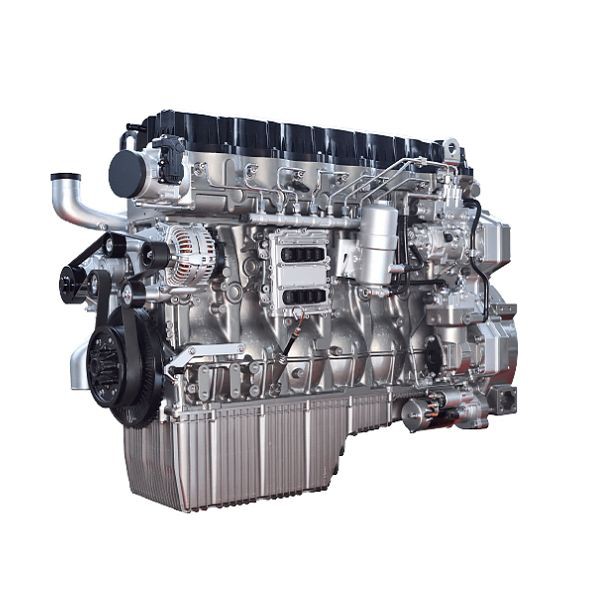
That’s why at our company, we’ve designed our entire truck engine lineup with transmission compatibility front and center, so fleets don’t have to compromise between engine power and transmission performance. Let’s take a look at a few of our most popular models. For medium-duty trucks, which handle local deliveries and stop-and-go routes, our YCK08-60 Truck Diesel Engine is a perfect match. It delivers 60 horsepower and 180 lb-ft of torque, optimized for consistent performance across a range of transmission types, from manual 6-speeds to lightweight automatics. It’s compact enough for box trucks and delivery vans, and its fuel efficiency pairs seamlessly with transmissions that prioritize quick, smooth shifts for city driving. For even heavier medium-duty applications, like vocational trucks that pull dump trailers or flatbeds, our YCK13-60 Truck Diesel Engine offers 260 horsepower and 750 lb-ft of torque, with a broader torque curve that works exceptionally well with 10-speed automated manual transmissions (AMTs)—now the most common choice for fleets, since they combine the efficiency of manuals with the ease of automatics.
For heavy-duty long-haul trucks that cross state lines with full loads, our YCK14N Truck Gas Engine is built to keep transmission systems operating at peak efficiency. With 470 horsepower and 1,750 lb-ft of torque, it’s designed to deliver strong torque across a wide RPM range, so the transmission doesn’t have to shift as frequently during highway cruising. That reduces wear on both the engine and transmission, and cuts down on fuel costs over thousands of miles. For fleets running in regions with strict emissions regulations, our YCY24-60 Truck Diesel Engine is another top pick, with advanced emissions technology paired with a torque curve that integrates perfectly with modern, emission-compliant transmissions. And for gas-powered heavy-duty applications, like semi-trucks used for regional hauling, our YCK13N-60 Truck Gas Engine offers 400 horsepower and 1,450 lb-ft of torque, with tuning calibrated for both manual and automatic transmissions to balance power and efficiency for long runs.

Modern technology has made this engine-transmission partnership even smarter. The latest transmissions use electronic control units (ECUs) that communicate directly with the engine’s ECU, sharing data about speed, load, road grade, and driver input to adjust shifts in real time. For example, if a truck is approaching a steep hill, the engine and transmission ECUs work together to downshift early, keeping the engine in its peak torque range so it has the power to climb without overworking. On the highway, they shift up to a high gear as soon as possible to reduce RPM, saving fuel. This level of integration is why today’s trucks are 30% more fuel-efficient than they were 20 years ago, and why matching the right engine to the right transmission is more important than ever.
I’ve seen first-hand what happens when this partnership is off. A few years back, we worked with a small fleet that was installing a high-torque diesel engine in their delivery trucks with a transmission calibrated for a lower-torque model. The transmission burned out in less than a year, costing them tens of thousands in repairs and downtime. They didn’t account for how the engine’s torque output would strain the transmission’s gear sets and clutch, leading to unnecessary wear. That’s why, as a supplier, we don’t just sell engines—we work with fleets and transmission manufacturers to ensure every engine we produce is designed to pair seamlessly with the most common transmission systems on the market. We offer detailed compatibility guides for all our models, including the YCK08-60 Truck Diesel Engine, YCK13-60 Truck Diesel Engine, YCY24-60 Truck Diesel Engine, YCK14N Truck Gas Engine, and YCK13N-60 Truck Gas Engine, so fleet managers can choose the right combination for their specific routes and needs.
Maintenance is another key part of keeping this partnership running smoothly. Even the best engine-transmission pair will wear out if not properly maintained. For engines, regular oil changes, air filter replacements, and tune-ups keep the torque curve consistent, so the transmission can do its job effectively. For transmissions, fluid changes are critical—old, dirty transmission fluid causes shifts to be rough, reduces power flow, and can damage gear sets over time. We always recommend that fleets follow both engine and transmission maintenance schedules closely, and when it’s time for replacements, choose components that are designed to work together, not just any off-the-shelf part.
Looking ahead, the engine-transmission partnership is only going to get more important as the trucking industry shifts to electrification and alternative fuels. Even electric trucks, which have instant torque from their motors, use a simplified transmission (usually a 1 or 2-speed) to balance power and efficiency at different speeds. For our part, we’re investing in next-generation engines that work with both traditional and emerging transmission technologies, from hydrogen-fueled engines paired with advanced automatics to hybrid systems that combine diesel power with electric motors and continuously variable transmissions. The core principle will stay the same: matching engine power and torque characteristics to the transmission’s ability to deliver that power to the wheels, for maximum performance, reliability, and cost savings.
At the end of the day, the engine-transmission relationship is the unsung hero of the trucking industry. It’s what lets a single truck move a full load of freight across the country, deliver groceries to a neighborhood, or haul construction materials to a job site, day in and day out. As a truck engine supplier, our job isn’t just to build powerful engines—it’s to build engines that work in perfect harmony with the parts that turn power into purpose. Whether you’re a fleet manager looking for medium-duty engines for city routes, or an owner-operator needing a heavy-duty engine for long hauls, we have a lineup of engines designed to integrate seamlessly with today’s transmission systems. If you’re looking to upgrade your fleet, reduce downtime, or improve fuel efficiency, we’d be glad to connect you with our team to learn more about our compatible engine models and how to build the right powertrain for your needs.
References
- Society of Automotive Engineers. (2022). Heavy-Duty Truck Powertrain Integration: Engine-Transmission Compatibility for Fuel Efficiency. SAE International.
- American Trucking Associations. (2023). Medium and Heavy-Duty Truck Transmission and Engine Design Trends. ATA Technology & Maintenance Council.
- Cummins Inc. (2021). Diesel Engine Torque Curves and Transmission Calibration for Over-the-Road Applications. Cummins Technical Report.
- Ford Motor Company. (2020). Gas-Powered Truck Engine and Transmission Pairing for Local Delivery Fleets. Ford Commercial Vehicles Engineering.
- International Energy Agency. (2022). The Role of Powertrain Integration in Reducing Heavy-Duty Truck Emissions. IEA Transport Research.